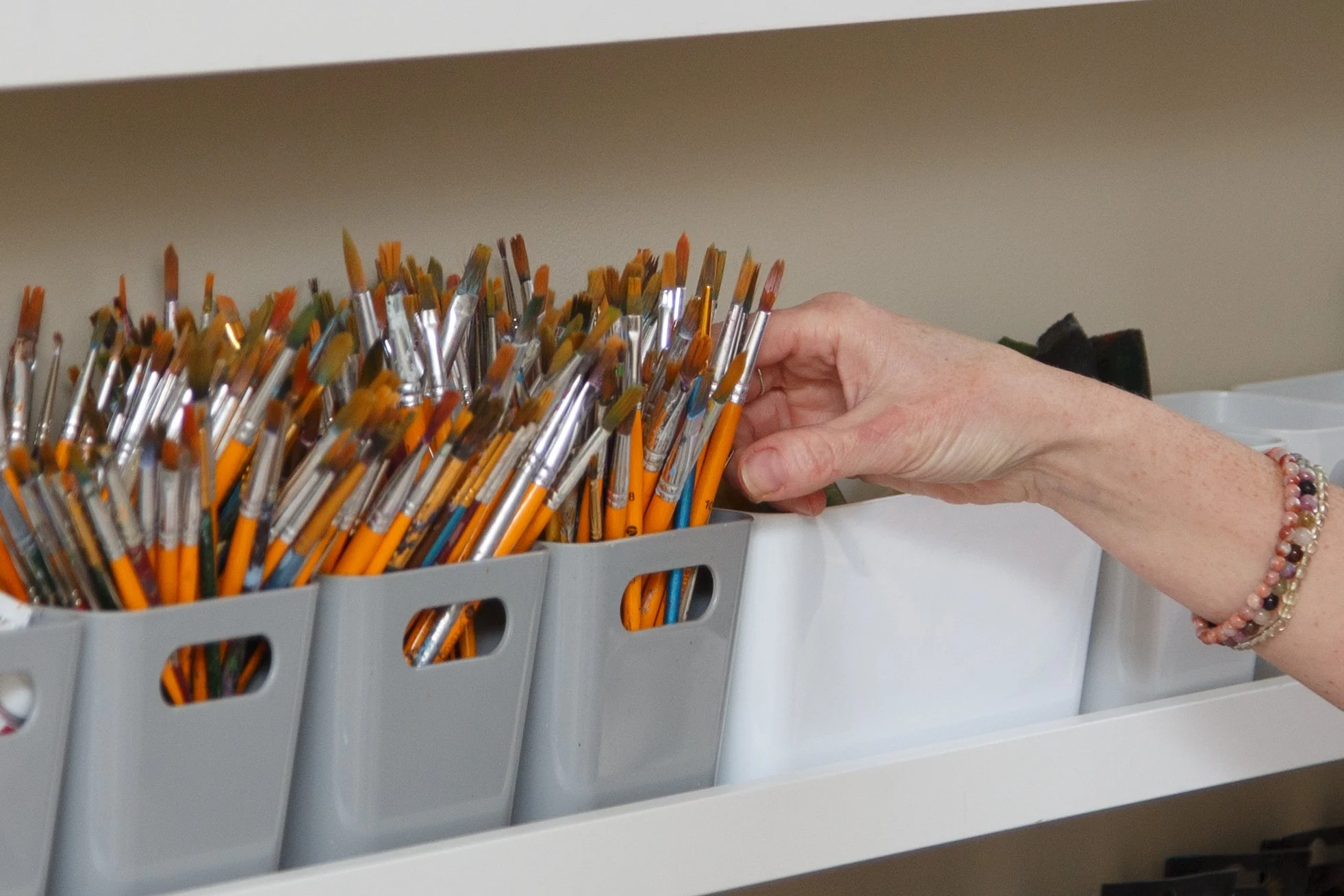
Finding acrylic paints and tools can be somewhat overwhelming, as there are so many brands on the market, from the very cheap, tiny tubes in a pack you get in discounted shops, to professional, high end paints from specialised art suppliers. But which ones would be best for you?
Before we start, a quick disclosure note: this isn't an ad, nor am I sponsored or paid by any of these brands. Everything mentioned here is simply what I genuinely love, trust and use in my own creative practice and studio sessions with my clients.
1: Paintbrushes
I often get asked about paintbrushes and which ones to buy. To be honest, recommending brushes is tricky because it is so personal. It all depends on your painting style, how you position yourself at the canvas, the pressure and grip you use, whether you prefer firm or soft bristles, and if you like short or long handles. That said, these are the brushes I love using in the studio and the ones my clients consistently gravitate towards.
For those really tiny details, I’d recommend the da Vinci Nova and Micro Nova. The Nova range offer a range of brushes including flat, round and filbert. The Micro Nova little brushes are perfect for creating intricate textures, like hair or small-scale features.
If you're looking for something a bit more versatile, the Winsor & Newton Galeria range are great. They come in both short and long handles, with flat, round, chiselled and detailed options. Something similar and affordable is the Pro Arte Masterstroke and Terry Harrison brushes.
2: Acrylic Paint
When it comes to acrylic paint, my studio is home to three different brands, each with its own unique vibe. Just like paintbrushes, quality is key. You do get what you pay for.
Daler and Rowney System 3 is perfect for students and hobbyists. It's reasonably priced and comes in a vast range of colours and sizes. It has a thinner consistency compared to professional paints, and can be a little hit and miss with colour mixing when you get serious with it. Other paints similar to System 3 are Winsor and Newton Galeria Acrylic Paint, and Daler and Rowney Graduate.
Liquitex Heavy Body is a professional paint and is great for hobbyists and those taking their painting a little more seriously. After lots of experimenting with my clients, I can happily say that mixing and matching colours ticks the boxes with this brand. This paint has a lovely consistency about it, and blends beautifully. Another brand similar to Liquitex is Winsor and Newton Professional.
Golden Acrylics Heavy Body is the crème de la crème of professional paint, but does have a heavier price tag. If you’re serious about acrylic painting, it is worth it, as long as though you use it regularly. I have found that paint in metal tubes don’t seem to last as long as those in plastic ones like Liquitex, and end up turning rock solid! Nevertheless, the buttery consistency of the paint is heavenly, and applies on to wood, paper or canvas nicely. Plus, colour mixing is a dream and easy to create.
3: Stay Wet Palettes
Stay wet paint palettes are a game-changer! I've tried a few, but the Cass Art and Sta-Wet Super Pro Palette are great. The Cass Art is slightly sleeker compared to the others, and it keeps the acrylic paint fresher for longer. The Sta-Wet Super Pro Palette is bigger palette if you need that extra room to mix your colours.
4: Acrylic Paper
If you like to paint on paper, then there are three brands I use in the studio: Winsor and Newton, Daler and Rowney and Cass Art.
Winsor and Newton Acrylic paper is a good quality paper, weighing 300gsm. It has a canvas look and has a waxy finish. Plus, the pads come in a range of sizes, including A4, A3, 16” x 12” and 16" x 20".
Daler and Rowney Acrylic paper has a texture close to linen, and weighs 230gsm and contains 20 sheets per pad. The pads come in a range of sizes of A4, A3 and A2.
Cass Art Oil and Acrylic paper is another fave of mine. Their acrylic paper pads have 15 sheets that are acid-free and weigh 290gsm. The texture is coarser than Winsor and Newton, giving your paintings more texture. You can find these in A3 and A4.
5: Stretch Canvases
If you're not a DIY art enthusiast or don’t have the tools to create your own canvases, pre-stretched canvases are great! But they can be a bit pricier than the DIY alternative. Unfortunately (like most things) stretched canvases have majorly gone up in price. My go-to brands for pre-made canvases are Jackson's Art Supplies, Winsor & Newton and Cass Art. If you're looking for something fancy, the Winsor & Newton professional smooth cotton canvas are so lovely to paint on. Its smooth texture is perfect for creating those detailed brushstrokes that make your art pop!
6: Canvas Board
Using stretched canvases can be a little expensive especially when practising and testing things out. Canvas boards are rigid painting surfaces with no bounce, and are made from either cotton, linen or jute. They are fabulous for quick paintings, experimental tests, plein air studies or final pieces. Being light, firm and slim make them a great surface to use when travelling about.
7: Easels
When it comes to painting, the way you position yourself will affect which easel to go for. The first thing to think about is comfort and whether you prefer to sit or stand. You may want to head to an art shop and try a few out to see what feels right.
If you're more of a table painter, check out The Danube Art & Craft Table Easel or the Winsor & Newton Workstation Ebro Table Easel made from sturdy wood. They come in A3 and A2, and can be positioned at a couple of different angles. Being lower than other table easels, client’s don’t get the shoulder ache. H shape table easels like Winsor & Newton or the more expensive Mabef are sturdy to support your canvas (especially if you’re heavy handed like me) and you can vastly change the angle.
For the stand-up artists, Winsor & Newton and Mabef have an array of easels to choose from, including portable ones for plein air painting. I do struggle with the field easels - I always find them a bit flimsy. I much prefer the H shape studio easels as they are sturdy and be purchased in various sizes.
8: Brush Cleaner
If you're going to spend your hard earned money on some fancy acrylic brushes, they deserve some TLC. The Masters Brush Cleaner and Preserver is a great little product as it works its magic by removing all sorts of stains, varnishes and paint types from the brushes. It's safe to use on any brush and it prevents crusty paint build-up and hardening. And, it's not just a cleaner as it conditions your brushes too, giving them an extra boost to hold more colour and create a smoother strokes.
9: Sketchbook
When it comes to the perfect sketchbook, my trusty sidekick is Moleskine! Its paper is just divine and the way acrylic paints glide on it is pure magic. Daler and Rowney, Pink Pig, Seawhite, Jackson’s Art Supplies and Cass Art sketchbooks are also top-notch quality and perfect for experimenting with acrylics. They come with different weighted papers such as 140gsm, 150gsm and 160gsm.
10: Wetting Agent
If you are a more experienced acrylic artist, then Golden Wetting Aid is great for creating acrylic masterpieces! Just a few drops of this concentrated additive in your water mixture reduces surface tension, miraculously increasing paint flow. It's like magic, especially when painting delicate details like hair and grass.